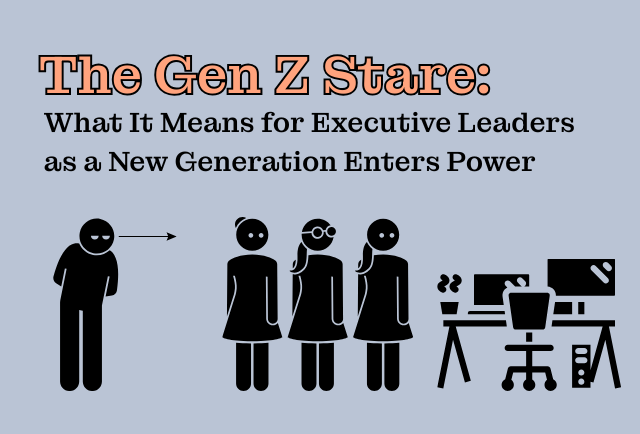
You ask a thoughtful question. You get… a blank, wide-eyed stare.
No nod, no reaction—just silence.
This now-viral behavior, dubbed “the Gen Z stare,” is sparking conversation across TikTok, HR forums, and increasingly… executive leadership teams. And it’s no longer just a junior employee trend—Gen Z is now entering management roles.
As they approach their late 20s and early 30s, Gen Z professionals are beginning to shape team dynamics, hiring practices, and leadership culture. For C-suite leaders and board members, this shift demands attention—not just to behavior, but to what’s driving it.
What Is the Gen Z Stare?
The “Gen Z stare” refers to a blank, quiet, often prolonged look that replaces traditional workplace cues like nodding, smiling, or verbal agreement.
It may signal:
- Processing or uncertainty
- Discomfort with small talk or unclear communication
- Disinterest in performative interaction
- Or simply: “Why are you talking to me like we’re close?”
Gen Zers aren’t trying to be rude. The stare is often neutral. But to older leaders, it can feel passive-aggressive, disrespectful, or disengaged.
Why It’s Showing Up Now—and What’s Behind It
1. The pandemic delayed socialization
Many Gen Z professionals entered the workforce during lockdown. They onboarded remotely, graduated from Zoom classrooms, and missed critical years of in-person work exposure.
2. They were raised online
This generation is fluent in text, memes, and silence. They know how to hold a pause—and are less inclined to fake reactions in person.
3. They see emotional labor as optional
For Gen Z, not every moment requires a performance. They’re drawing boundaries in real time—and the stare is part of that boundary.
Why This Matters Now: Gen Z Is Entering Management
This isn’t just an intern dynamic. Gen Z professionals are:
- Managing projects
- Leading teams
- Representing their companies in meetings and pitches
- Becoming people managers for the first time
If executive leadership teams don’t understand the behavior—and more importantly, the mindset—behind the Gen Z stare, they’ll miss the moment to shape, mentor, and retain the next generation of leaders.
How Executive Presence Is Evolving
The stare is a sign of broader leadership change. What’s rising in its place?
| Old Norm |
Emerging Norm |
| Command the room |
Listen first, speak second |
| Perform executive polish |
Communicate with purpose |
| Lead through visibility |
Lead through alignment |
| Rely on hierarchy |
Build trust through values |
Gen Z isn’t just bringing new work styles—they’re reshaping what executive presence means.
Leading Gen Z? Here’s What Helps
- Clarity over charm
Skip the small talk. Be direct about goals and next steps.
- Context builds trust
Let them know why something matters—not just that it does.
- Don’t overinterpret silence
A stare is often a pause. Ask: “Want to walk me through what you’re thinking?”
Normalize coaching
Soft skills can be taught. So can cross-generational communication—for your senior team too.
Quick Context: Why Older Generations React Differently
To help executives calibrate expectations, here’s a high-level snapshot—not the main point, but useful context:
| Generation |
Known For |
Likely Reaction to the Stare |
| Boomers |
Loyalty, structure |
May read it as disrespect |
| Gen X |
Independence, directness |
May assume disinterest |
| Millennials |
Collaboration, feedback |
May be unsure how to respond |
| Gen Z |
Boundaries, authenticity |
See it as normal or protective |
Understanding this helps teams lead more effectively—not emotionally.
How BlueSteps Helps Leaders Adapt
BlueSteps offers tools designed for today’s executive leaders—especially those navigating multigenerational teams and fast-shifting norms.
✅ Executive Career Services (ECS)
1:1 coaching for managing Gen Z talent, refining executive presence, and leading across communication styles.
✅ Leadership Development Support
Guidance for preparing younger leaders for management—and refreshing senior leaders' ability to coach them effectively.
✅ Reputation & Communication Coaching
Develop poise and clarity when verbal and nonverbal cues vary across teams.
✅ Governance & Team Strategy
Support for boards and CHROs designing inclusive, adaptive leadership pipelines.
Final Thought
The Gen Z stare isn’t a phase. It’s a sign that leadership culture is shifting.
Today’s executives need to read the room—and sometimes the silence.
Because the next generation isn’t just watching.
They’re leading.
Want to lead with clarity across generations?
Join BlueSteps and access the executive coaching, communication tools, and leadership frameworks to thrive—no matter who’s staring back.
👉 Become a member